
Phoenix Local
Paver & Travertine Installation
Natural stone and concrete paver installs built for desert heat, pool decks, and outdoor living spaces.
Free estimate
Tell us what you need
Three fields. It reaches a person here, not a call centre.
Pavers and Travertine That Hold Up
Updated October 2026
Travertine and concrete pavers are among the most searched hardscape materials in the Southwest, and for good reason: they handle extreme heat, stay cooler underfoot than poured concrete, and photograph beautifully next to artificial turf and desert landscaping. InfinityTurf Landscaping LLC is an STC Certified Installer with over 10 years of paver and travertine work across the Valley, a 4.9-star rating across 27 Google reviews, and 201 documented project photos you can actually look through. If you want the install done clean with no callbacks, call us directly for a free quote.
What drives cost on a paver or travertine job is the size of the surface, the material grade you choose, the amount of demolition and site prep required to get a stable base, and whether you're working with a straightforward rectangular patio or a complex pool-surround with curves and inlays. Travertine pool decks tend to run higher than standard concrete paver patios because the material cost is greater and the cutting is more precise. For a travertine and turf combination install, scope can expand considerably depending on square footage and design complexity. Every job is different, contact InfinityTurf Landscaping LLC for an accurate estimate.
Why It Matters
Why Travertine Outperforms Concrete in Desert Heat Travertine
Surface temperature, drainage, and longevity all tell a different story when the mercury hits 115.
Stays Cooler Underfoot
Travertine's natural porosity and light coloring reflect heat rather than absorbing it. Bare concrete in Arizona summer can reach 160°F surface temperature. Travertine typically runs 20 to 30 degrees cooler. A real difference if you're walking barefoot from a pool.
Drains Without Pooling
Travertine's open-cell surface allows water to pass through rather than sheet across. On a pool deck or patio, that means monsoon runoff drains quickly instead of sitting and creating slip hazards or eroding your base over time.
Holds Color for Decades
Concrete pavers fade and mottle over years of UV exposure. Natural travertine's coloration runs all the way through the stone, so what you see on install day is essentially what you'll have in fifteen years with basic sealing and cleaning.
No Cracking From Thermal Expansion
Poured concrete slabs expand and contract with temperature swings, and they crack. Individual paver units move independently. That's why a well-installed paver or travertine surface outlasts monolithic concrete in climates with extreme daily temperature variance.
Our Process
How We Install Pavers and Travertine
- 01
Demo, Grade, and Compact
We remove existing material, excavate to the correct depth, and compact a crushed-aggregate base. The base is what separates a paver surface that lasts from one that shifts and heaves. Caliche layers common across the Valley get broken through properly, not worked around.
- 02
Sand Bed and Layout
A screeded sand layer goes down over the compacted base, giving us the precise, level setting bed each stone or paver needs. Layout is marked before a single paver is set, so the pattern runs true from edge to edge. Cuts are made with a wet saw, not a grinder.
- 03
Set, Edge, and Seal
Pavers or travertine units are set, joints are filled with polymeric sand or grout depending on the material and application, and edges are secured. We seal travertine to protect the surface against pool chemicals, staining, and UV. Cleanup is part of the job, we leave the site clean.
What a Paver or Travertine Install Covers
- 01
Pool Decks
Travertine is the dominant material on high-end pool decks in this market. It's cooler, drains better, and holds up to pool chemistry when properly sealed.
- 02
Patios and Outdoor Living Areas
From simple square patios to full outdoor living setups with BBQ islands and seating areas, pavers provide a durable, attractive surface that concrete can't match aesthetically.
- 03
Driveways
Concrete pavers carry vehicle loads well when installed over a properly compacted base. They're also far easier to repair than poured concrete, a single damaged unit lifts out and replaces without touching the surrounding surface.
- 04
Walkways and Pathways
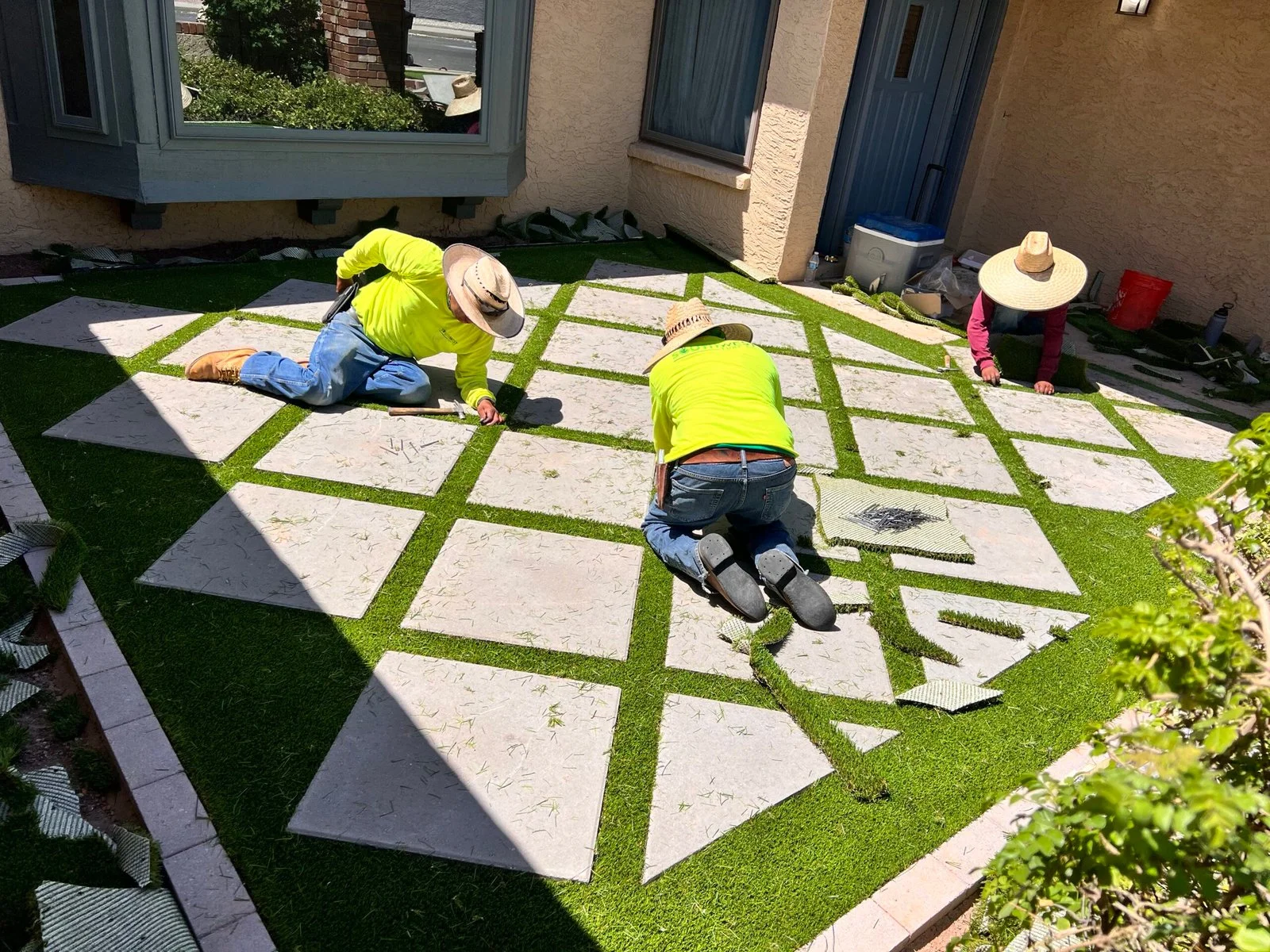
Stepping stone layouts with artificial turf or decorative rock between the units are among the most popular designs we build. The combination is HOA-compliant, low-maintenance, and genuinely good-looking.
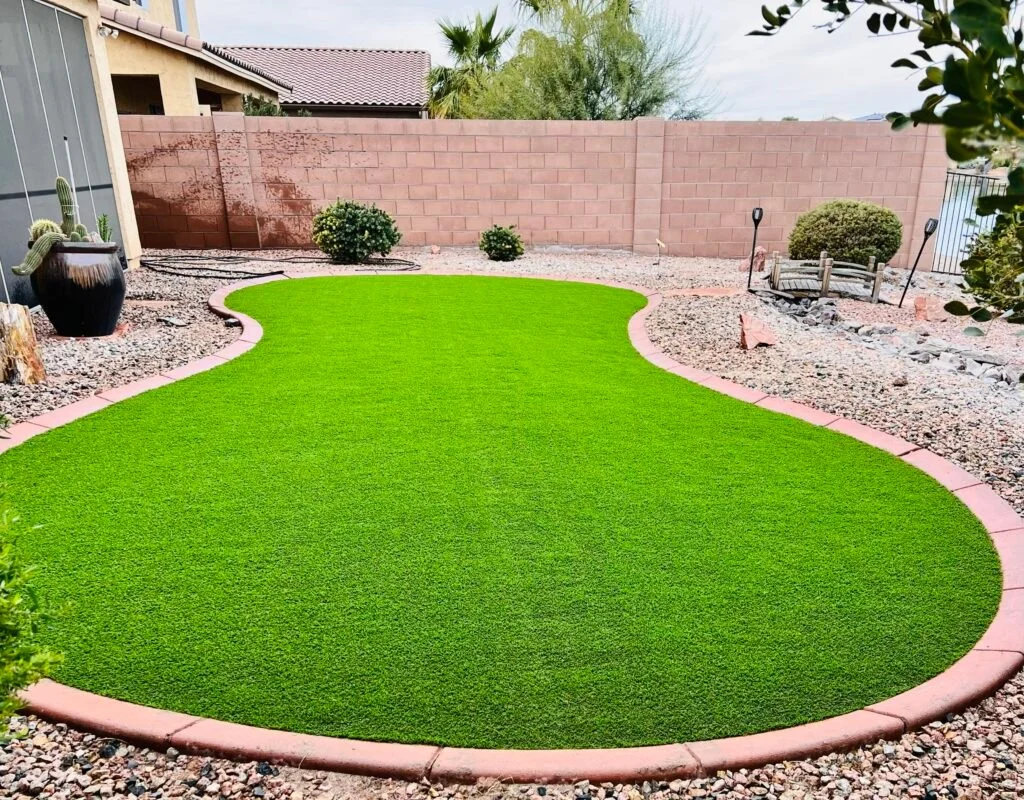
Travertine Paired With Turf: A Design That Actually Works
What You Get With InfinityTurf
Ten years of installs, an STC certification, and 27 five-star reviews. That's the paper trail.
- STC Certified Installer Industry certification for synthetic turf and hardscape work
- 4.9 stars across 27 Google reviews Real customers, real projects, verified names
- 10+ years of Valley experience We know caliche, HOA requirements, and desert drainage
- Full-scope service Demo through final cleanup, one crew, no subcontractors