
Phoenix Local
Landscape Site Preparation and Demolition
Excavation, grading, and sub-base compaction handled by STC Certified Installers with 10 years of field experience.
Free estimate
Tell us what you need
Three fields. It reaches a person here, not a call centre.
What Drives Site Prep Cost
Updated October 2026
Site prep cost varies more than most homeowners expect because no two yards start from the same condition. Scope, soil type, existing hardscape, and the depth of excavation required all push the final number in different directions. What's consistent is this: skipping or shortcutting groundwork is the single most expensive mistake in any turf or paver project. Depressions form, drainage fails, and the finished surface buckles within a season. InfinityTurf Landscaping LLC, an STC Certified Installer with a 4.9-star rating across 27 Google reviews, handles the full grading and site preparation process before a single paver is set or a seam of turf is rolled. Call us to get an accurate assessment of what your yard actually needs.
A proper site prep sequence runs from demolition of existing material through final compaction of the sub-base. On caliche-heavy desert soil, that can mean mechanical breaking and haul-off before any grading begins. On sandy loam, it may mean adding a stabilizing base aggregate rather than excavating deep. Project size is the other primary cost driver: a 200-square-foot side run and a 2,000-square-foot backyard transformation are not priced from the same starting point. Material conditions, access for equipment, and the specific installation that follows the prep work (whether that's artificial grass installation, paver installation, or a travertine and turf combination) all determine scope. Every job is different, contact InfinityTurf Landscaping LLC for an accurate estimate.
The Site Preparation Process, Step by Step
Every InfinityTurf installation follows this sequence from demolition through compacted sub-base. There's no way to compress it.
- 01
Demolition and Material Removal
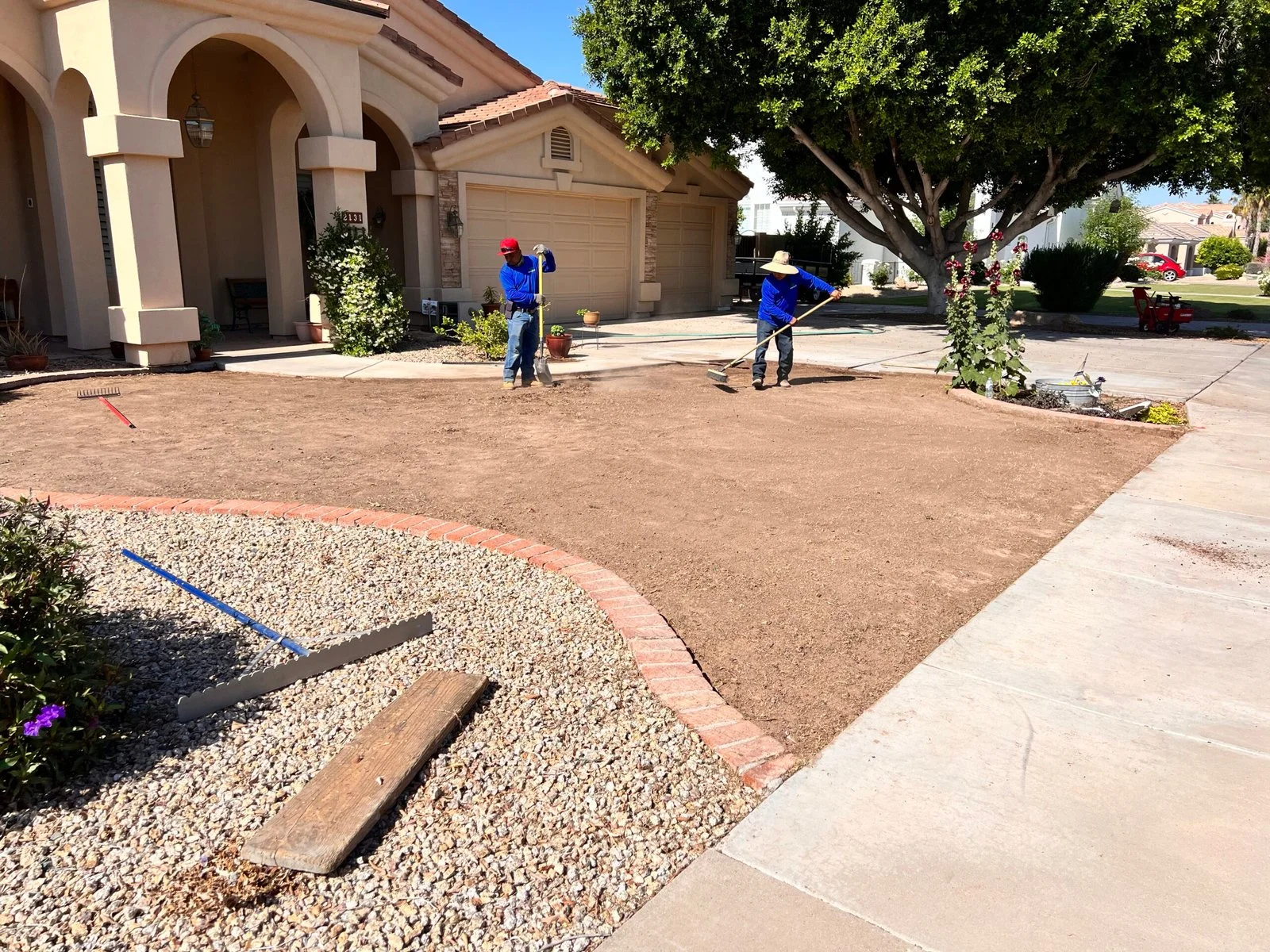
Existing sod, gravel, decomposed granite, or hardscape is cleared and hauled off-site. On older properties, this often reveals compacted caliche or unexpected debris layers that must be addressed before grading starts.
- 02
Excavation to Required Depth
We cut to the depth the finish installation demands. Turf runs typically require 3 to 4 inches of excavation; paver systems often need more to accommodate a full compacted base and bedding layer without raising the finished grade above adjacent concrete.
- 03
Precision Grading and Slope Establishment
Ground is graded to direct surface water away from structures and toward designated drainage paths. In desert yards, improper slope causes ponding during monsoon events. We establish a minimum 1 to 2 percent fall across the entire prepared area.
- 04
Sub-Base Installation and Compaction
Crushed aggregate base is spread and compacted in lifts using industrial plate compactors. This is not optional and it's not a shortcut opportunity. A properly compacted sub-base is what separates a surface that lasts from one that shifts and settles in the first Arizona summer.
Cost Factors
What Raises or Lowers Site Prep Cost
Square Footage
The most direct cost variable. Equipment mobilization is largely fixed, but labor hours, aggregate volume, and haul-off weight all scale with area. Larger yards get a lower per-square-foot rate; smaller projects carry higher minimums.
Existing Material
Removing dry-set pavers is faster than breaking out concrete. Pulling thin gravel is faster than excavating caliche hardpan that requires mechanical breaking. The existing condition of your yard determines equipment selection and labor time before a single measurement is taken.
Equipment Access
A standard gate opening that won't pass a mini-excavator means hand work or smaller equipment runs. Hand excavation costs more per cubic yard than mechanical. Side yards and narrow runs are inherently more labor-intensive than open backyard fields.
Drainage Requirements
Sites that require french drain installation, drainage channel cutting, or slope correction beyond simple grading add scope to the prep phase. Some drainage solutions are straightforward; others require re-routing surface flow around pool equipment or existing hardscape.
Sub-Base Depth
A turf-only install needs less base depth than a paver field with a full compacted base and bedding sand. Retaining wall footings require deeper excavation still. The finish product drives the prep specification.
Haul-Off Volume
Excavated material and demolished hardscape have to go somewhere. Haul-off is calculated by the load. Caliche and concrete weigh considerably more per cubic yard than sod or decomposed granite, so the same apparent volume can cost more to remove.
Why Sub-Base Compaction Is Non-Negotiable
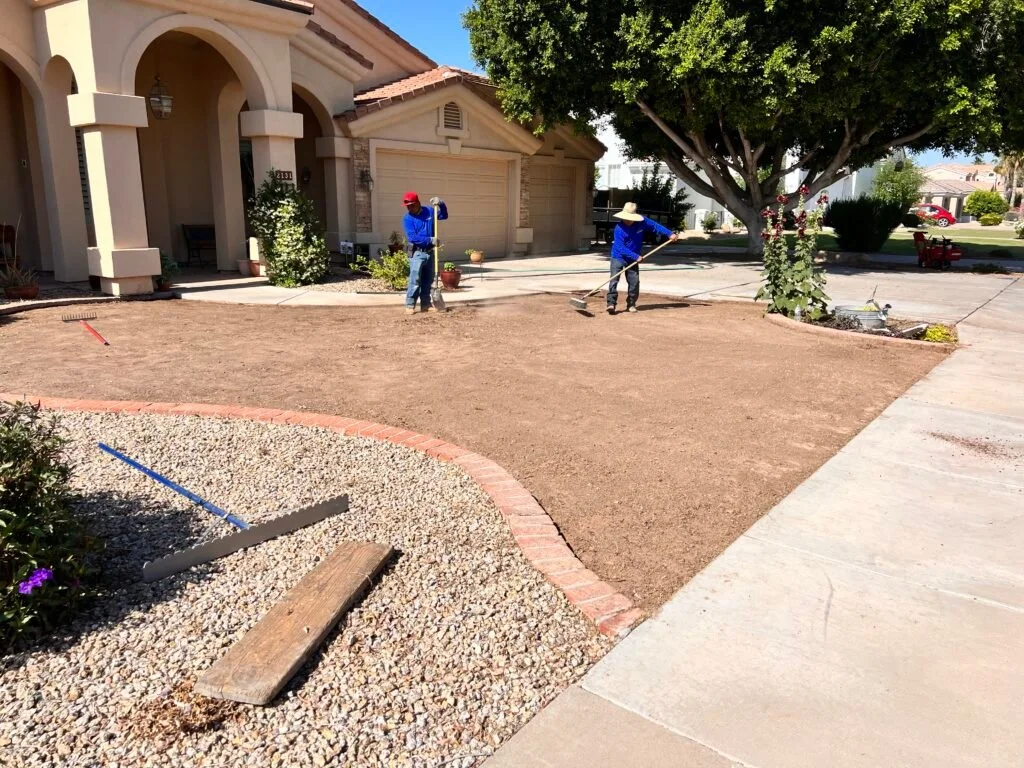
Every settlement problem we've been called to repair traces back to one root cause: inadequate compaction at the sub-base stage.
Full-Service Scope
From Demo to Final Install: One Crew, One Call
- 01
Site Assessment
We inspect the existing surface, measure the area, assess soil condition, check grade and drainage, and identify any access constraints before quoting. No guesses.
- 02
Demolition and Prep
Existing material is removed, excavation is completed to specification, the sub-base is graded and compacted, and the site is ready for the finish installation.
- 03
Finish Installation
Whether the finish layer is artificial turf, pavers, travertine, or rock and stone work, the same licensed crew completes it on the same prepared base.
What You Can Verify Before You Call
InfinityTurf Landscaping LLC is an STC Certified Installer, licensed in AZ, and carries a 4.9-star rating across 27 Google reviews.
- STC Certified Installer Industry certification specific to synthetic turf installation, not a general contractor credential.
- Licensed in Arizona License status is public record. Ask for the number when you call and verify it with the Arizona Registrar of Contractors.
- 4.9 stars across 27 Google reviews Verified reviews from real clients on the Phoenix Valley jobs they hired us to complete.
- 10+ years of field experience Desert soil conditions, caliche hardpan, and monsoon drainage patterns. We've worked through all of them across the Valley.
Site Prep Questions, Answered Directly
How much does site prep typically cost for a turf or paver install?
How deep does excavation need to go for artificial turf installation?
What is caliche and how does it affect site prep in desert yards?
Does the grading affect drainage during monsoon season?
Can you handle both site prep and the finish installation on the same project?
What happens if site prep is skipped or done poorly before turf is installed?
What is caliche and how does it affect site prep cost in desert yards?
Does grading during site prep affect drainage during monsoon season?
What is a site prep contractor and what do they handle?
What are the steps in a proper site preparation sequence?
Get an Accurate Site Prep Assessment
STC Certified. Licensed in AZ. 4.9 stars across 27 Google reviews.