
Phoenix Local
Driveway & Walkway Paving
Pavers installed by an STC Certified crew with 10+ years in the Phoenix Valley and a 4.9-star rating across 27 Google reviews.
Free estimate
Tell us what you need
Three fields. It reaches a person here, not a call centre.
Driveways and Walkways Built for Desert Conditions
Updated October 2026
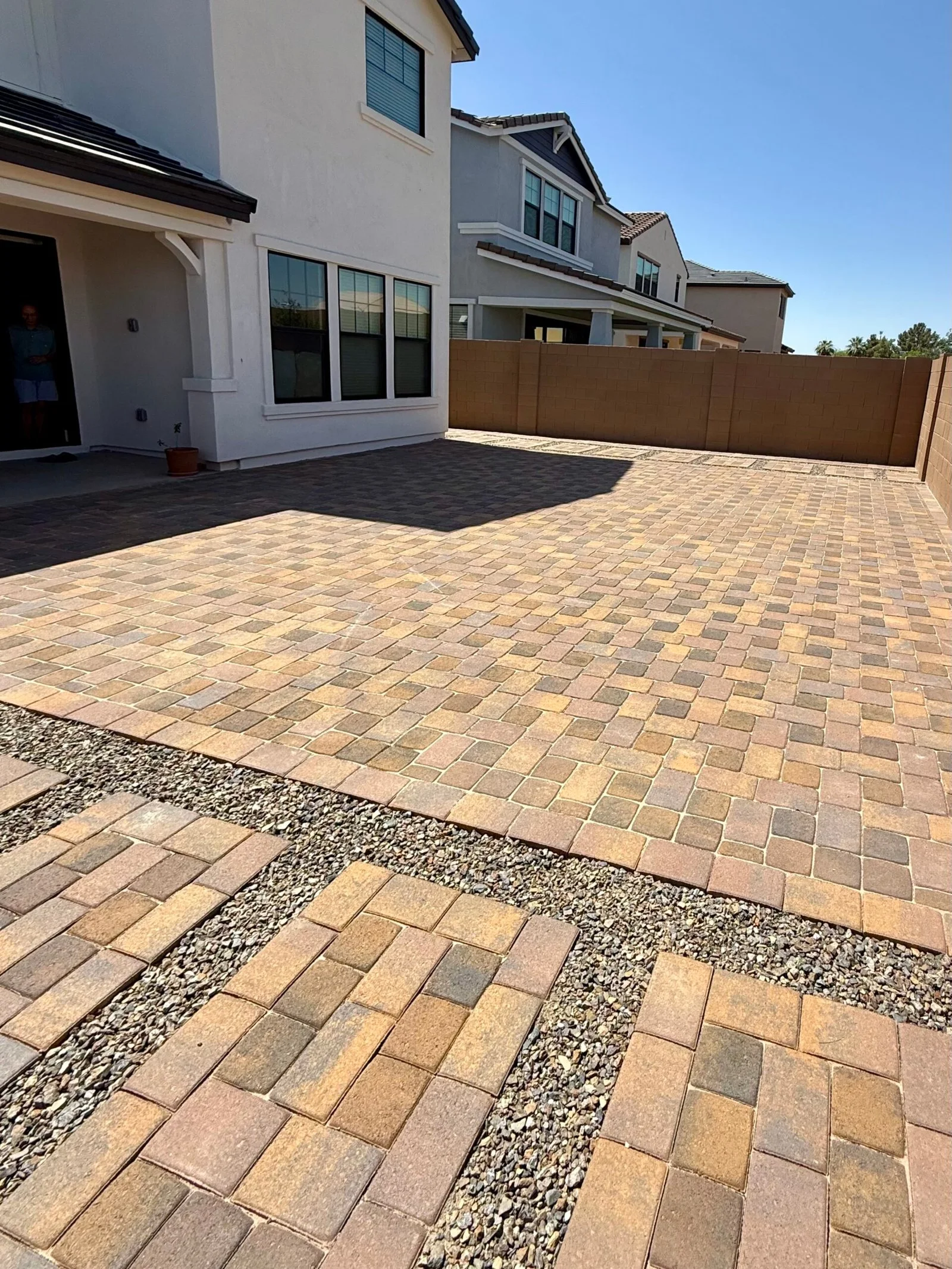
Pavers are a solid choice for a driveway, they handle heat expansion better than poured concrete, they drain faster after monsoon rain, and a cracked section can be pulled and replaced without tearing out the whole surface. That's not a small thing in a climate where summer ground temps crack plain concrete within a few years. InfinityTurf Landscaping LLC handles the full scope: demo, base prep, sand setting, paver placement, and final compaction and sealing. The crew is STC Certified and has been doing this across the Phoenix Valley for over a decade. Call (623) 263-2652 for a free on-site quote.
The cost of a driveway or walkway paving project depends on the square footage, the paver material you choose (concrete, travertine, or brick), the condition of the existing surface, and how much demolition is needed upfront. A small decorative walkway and a full double-wide driveway are entirely different scopes. Our paver installation and repair work covers both residential driveways and foot-traffic pathways, and every job includes proper base compaction so the surface doesn't shift or settle after the first summer. Every job is different, contact InfinityTurf Landscaping LLC for an accurate estimate.
Why Pavers
Concrete Slabs vs. Pavers in Desert Heat Pavers
In the Phoenix Valley, pavers outperform poured concrete for one simple reason: they move with the heat instead of cracking under it.
What the Installation Process Covers
One crew, start to finish, no subcontractors, no handoffs.
- 01
Demo and Haul-Off
We remove the existing surface, concrete, asphalt, or old pavers, and haul it off. The demolition is included in the project scope, not billed as a separate surprise after the fact.
- 02
Base Prep and Compaction
Caliche soil in the Phoenix Valley doesn't drain on its own. We cut to proper depth, add a compacted gravel base, and layer in bedding sand before a single paver goes down. Skip this step and the surface sinks inside a year.
- 03
Paver Layout and Setting
Pattern, field cuts, and edge restraints are all part of the install. Straight lines matter on a driveway, and consistent joint spacing matters on a walkway, both take time to do right.
- 04
Compaction, Joint Sand, and Cleanup
Once the field is set, we compact the entire surface, sweep polymeric sand into the joints to lock units in place, and clean up the site completely. You get a finished product, not a construction zone.
Materials
Paver Options for Driveways and Walkways
Concrete Pavers
Durable, cost-effective, and available in dozens of colors and profiles. Concrete pavers handle vehicle load well and are the most common choice for driveways in the Phoenix Valley. They can be laid in running bond, herringbone, or basket-weave patterns depending on the look you're after.
Travertine
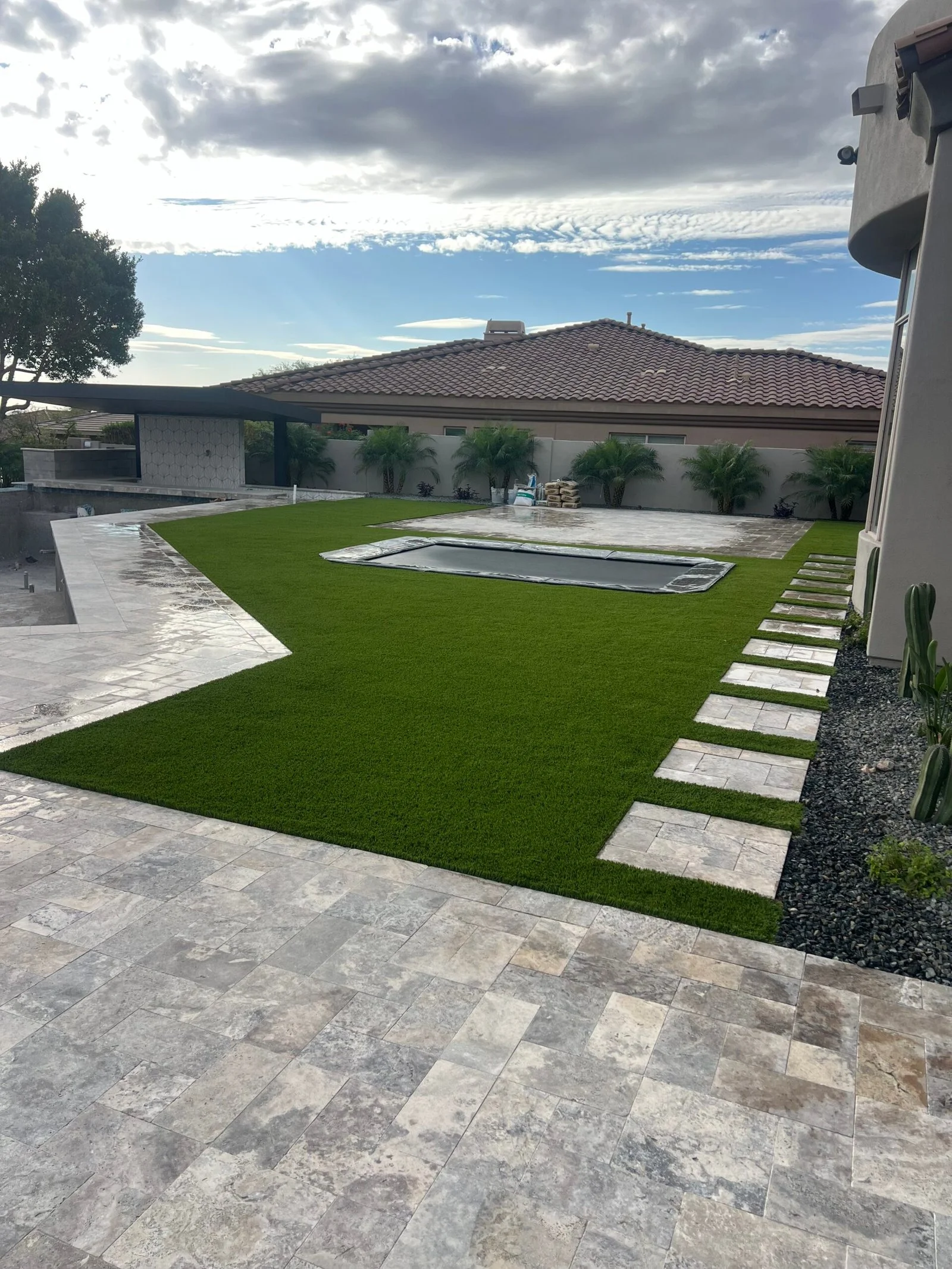
A natural stone option that stays noticeably cooler than concrete underfoot in direct sun. Popular for pool decks, backyard walkways, and front entries where barefoot traffic is common. Travertine pairs naturally with artificial turf for a clean, low-water yard design.
Brick Pavers
Classic look, proven longevity. Brick holds color without fading and handles heavy vehicle loads without issue. It's a less common choice in the Valley, but it's available and it's the right call for certain architectural styles where concrete looks cheap by comparison.
How Driveways and Walkways Work Together
Three Reasons Paver Jobs Fail
Most paver problems trace back to the same shortcuts taken during install.
- 01
Inadequate Base Depth
A driveway base that works in Colorado needs to be deeper in clay-heavy Phoenix soil. Installers who cut depth to save time produce driveways that sink at the edges within two summers.
- 02
No Edge Restraints
Pavers without solid edge restraints migrate outward over time. The joints widen, the pattern distorts, and eventually a full reset is the only fix. Edge restraints add maybe an hour to a project. Skipping them adds years of problems.
- 03
Wrong Sand in the Joints
Regular mason's sand in paver joints washes out in the first monsoon. Polymeric sand sets into a semi-rigid material that resists water, ants, and weed germination. It's not optional. It's how the surface stays locked.
What You're Getting With This Crew
STC Certified. 4.9 stars. 10+ years across the Phoenix Valley.
- STC Certified Installer Industry credential for synthetic turf and hardscape systems
- 4.9-star average across 27 Google reviews Verified, published, and current
- 10+ years of local installs Chandler, Gilbert, Mesa, and the greater Phoenix Valley
- Full-scope work: demo through cleanup One crew, one call, no handoffs
Common Questions About Driveway and Walkway Paving
Are pavers a good choice for a driveway in the Phoenix Valley?
How deep does the base need to be under a paver driveway?
What's the difference between concrete pavers and travertine for a driveway?
Can an existing concrete driveway be replaced with pavers, or does it need full demo?
How do polymeric joint sand and standard sand differ, and does it matter?
What's the difference between concrete pavers and travertine for a driveway or walkway?
Get a Free Quote on Your Driveway or Walkway
Every job gets an on-site assessment before we quote a number.