
Phoenix Local
Concrete & Block Walls
Structural block and concrete wall installation, from retaining applications to decorative privacy screens.
Free estimate
Tell us what you need
Three fields. It reaches a person here, not a call centre.
Concrete Block Walls Built to Spec
Updated October 2026
Concrete and block walls are structural work, and structural work done wrong shows up fast, especially in desert soil where caliche hardpan, monsoon saturation cycles, and extreme thermal expansion put every footing to the test. InfinityTurf Landscaping LLC has been building retaining walls, privacy walls, and decorative block structures across the Phoenix Valley for over 10 years, and our approach starts at the ground: proper footing depth, correct block selection for the application, and drainage detailing that keeps the wall from failing behind the face where you can't see it. We're an STC Certified Installer, licensed in AZ, and carry a 4.9-star rating across 27 Google reviews. Call us to talk through your project before you pour a single yard of concrete.
Block wall scope varies more than most homeowners expect. A short garden border and a six-foot retaining wall on a sloped lot are structurally different jobs, different block grades, different footing requirements, different drainage provisions behind the wall face. Cost drivers include wall height, linear footage, soil condition (caliche requires mechanical breaking before any footing goes in), block type, and whether the project connects to adjacent paver installation and hardscape work. Decorative painted finishes, cap block selection, and integration with existing site prep and grading also affect the final scope. Every job is different, contact InfinityTurf Landscaping LLC for an accurate estimate.
What Separates a Solid Wall from One That Shifts
The failure point on most block walls isn't the block. It's everything behind and beneath it.
Block Wall Types
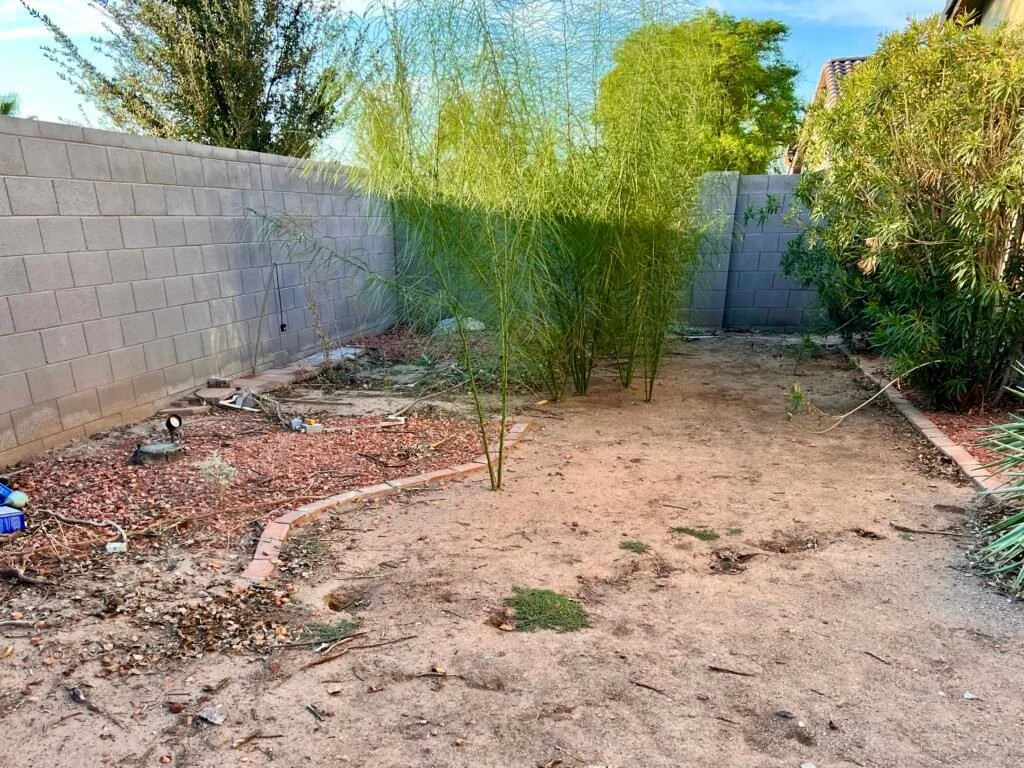
Applications We Build Across the Phoenix Valley
One crew handles the full range, retaining, privacy, decorative, and combination applications.
Retaining Walls
Grade changes and sloped lots require engineered retention to prevent soil movement. We build CMU retaining walls with proper batter, compacted footings, and drainage provisions suited to desert soil conditions.
Privacy Walls
Six-foot block privacy walls are standard in desert neighborhoods and HOA communities across Chandler, Gilbert, and Mesa. We match existing block coursing, texture, and cap style so the new wall reads as part of the original structure.
Decorative Block Screens
Breeze block and decorative CMU patterns add visual interest to patios and outdoor living spaces without sacrificing airflow, a practical choice in a climate where solid walls trap heat against the house.
Garden and Planter Walls
Low-profile block planters and garden borders define desert landscape zones, separate rock and stone work from turf areas, and hold soil in raised planting beds without shifting over time.
Combination Projects
Block walls frequently anchor larger landscape projects alongside travertine and paver installations, artificial turf borders, or graded drainage swales. We coordinate scope start to finish so the wall and the surrounding hardscape work as one system.
How We Work
From Footing to Finished Cap Block
- 01
Site Assessment and Layout
We assess soil type, grade change, drainage flow direction, and neighboring structures before any layout stakes go in. Caliche layers get located early, they dictate footing strategy and demo scope.
- 02
Footing, Block, and Drainage
Footing depth and width are sized for the wall height and soil load. Gravel backfill and drainage pipe go in behind the face on retaining applications before any block is laid. No shortcuts on the parts you won't see after the job is done.
- 03
Cap, Finish, and Cleanup
Cap block is set with consistent joint spacing and sealed where the application requires it. We clean the site completely before we leave, mortar residue, broken block, and excavation material are hauled away. See our full cleanup process.
Desert Soil Conditions That Affect Every Block Wall Job
Common Questions About Block Wall Installation
How deep does a concrete block wall footing need to be in the Phoenix Valley?
What type of block is used for retaining walls versus privacy walls?
Do concrete block walls need drainage behind them?
Can a concrete block wall be painted or textured to match my existing home exterior?
How long does a block wall installation typically take?
Does InfinityTurf handle block wall projects that connect to paver or turf installations?
What drives the cost difference between a basic block wall and a retaining wall on a sloped lot?
Why Homeowners Call Us First
What you get when InfinityTurf builds your block wall.
- STC Certified Installer A credential that requires demonstrated knowledge of synthetic and hardscape installation standards, not just a business license.
- 4.9 stars across 27 Google reviews Real jobs, real homeowners, real names. You can read every review on our Google listing.
- Over 10 years of local experience We know Phoenix Valley soil, HOA wall height standards, and the block grades that hold up in desert heat.
- One crew from excavation to cleanup No subcontractors juggling your footing while someone else schedules the block delivery. We run the whole job.
Get Your Block Wall Quote
Call (623) 263-2652 to schedule your free on-site assessment. Mon through Sat, 6AM to 6PM.