
Phoenix Local
Paver Installation and Paver Repair
STC Certified installers with 10+ years setting pavers across Chandler, Gilbert, Mesa, and the Phoenix Valley.
Free estimate
Tell us what you need
Three fields. It reaches a person here, not a call centre.
Paver Installation and Repair That Holds
Updated October 2026
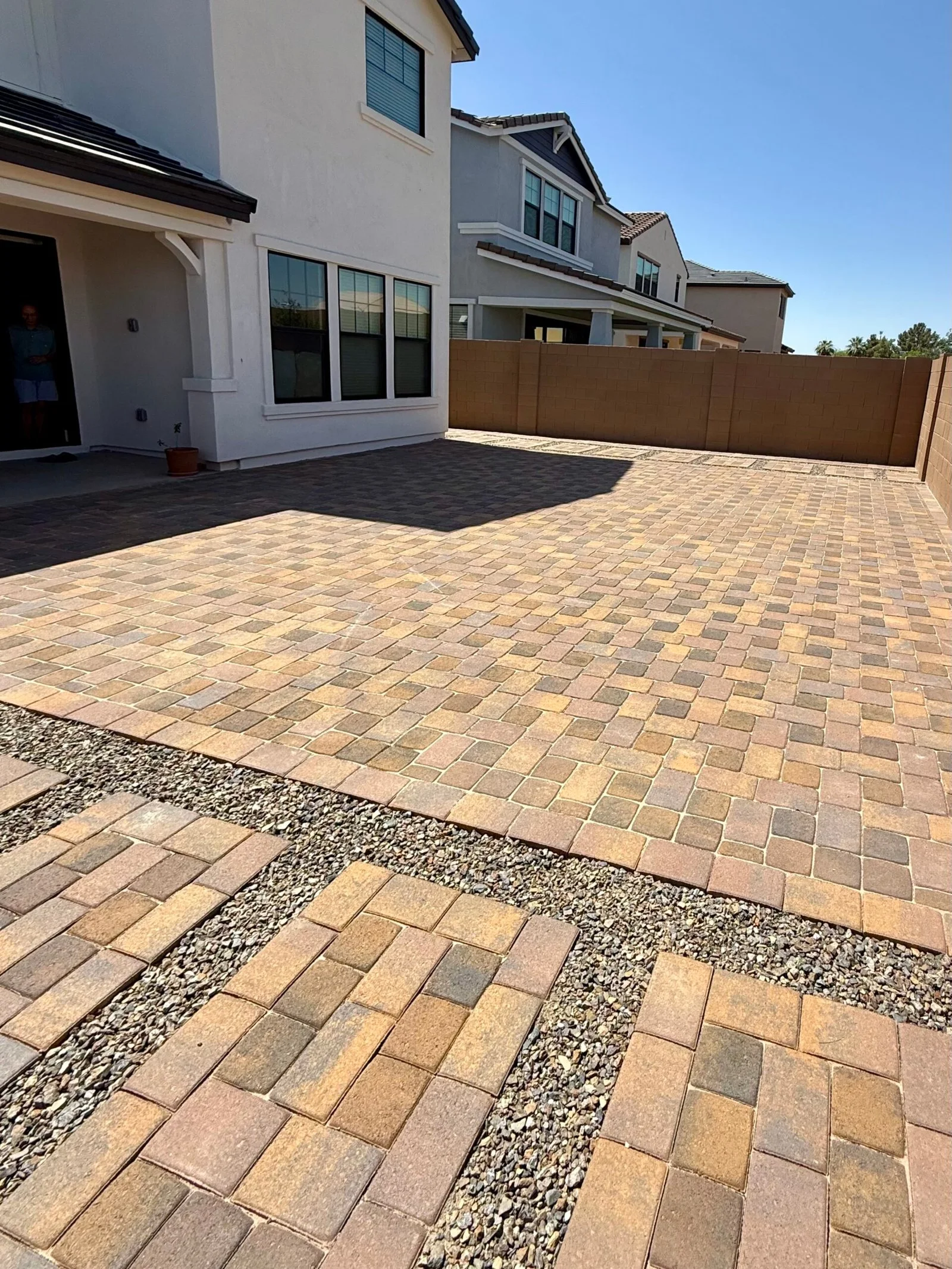
Paver installation and paver repair require more than dropping stone on sand. Base depth, compaction, edge restraint, and joint sand selection all determine whether your patio or walkway looks the same in five years or starts rocking loose after the first monsoon season. InfinityTurf Landscaping LLC has spent over 10 years setting pavers across the Phoenix Valley, holds STC Certified Installer credentials, and carries a 4.9-star average across 27 Google reviews. Call (623) 263-2652 to schedule your free quote.
The scope of a paver project drives cost more than almost anything else. A basic walkway runs far less than a full paver patio with a seat wall and integrated lighting. Material choice matters too: standard concrete pavers, travertine, and flagstone all land at different price points with different heat-retention profiles. Arizona caliche soil often requires deeper excavation than homeowners expect, and skipping that step is the single most common reason paver surfaces fail within a few years. Every job is different. Contact InfinityTurf Landscaping LLC for an accurate estimate.
What Separates a Solid Paver Job from a Failing One Solid
Most paver failures trace back to what you can't see: the base.
Proper Excavation Depth
Arizona caliche is dense, drainage-resistant, and unforgiving. We excavate to the depth the job actually needs, not the minimum that looks adequate on day one.
Compacted Aggregate Base
A crushed rock base compacted in lifts gives pavers somewhere solid to sit. Skip this step and the surface will shift, crack, and heave within a few seasons.
Edge Restraint Installation
No edge restraint means the outer rows migrate outward over time. We set it on every project, staked properly so the whole field stays locked.
Polymeric Joint Sand
Polymeric sand hardens when wet and resists ant intrusion, weed seed germination, and washout during monsoon rains. Regular sand does none of those things.
Pattern and Grade Planning
Drainage slope is engineered before a single paver goes down. Water needs somewhere to go, and that direction shouldn't be toward your foundation.
Final Compaction and Sealing
We run a plate compactor over the finished surface to set the pavers into the bedding layer, then seal on request to lock color and simplify long-term upkeep.
Our Process
How a Paver Project Actually Gets Done
Three phases. No subcontractors. One crew from demo through cleanup.
- 01
Site Assessment and Demo
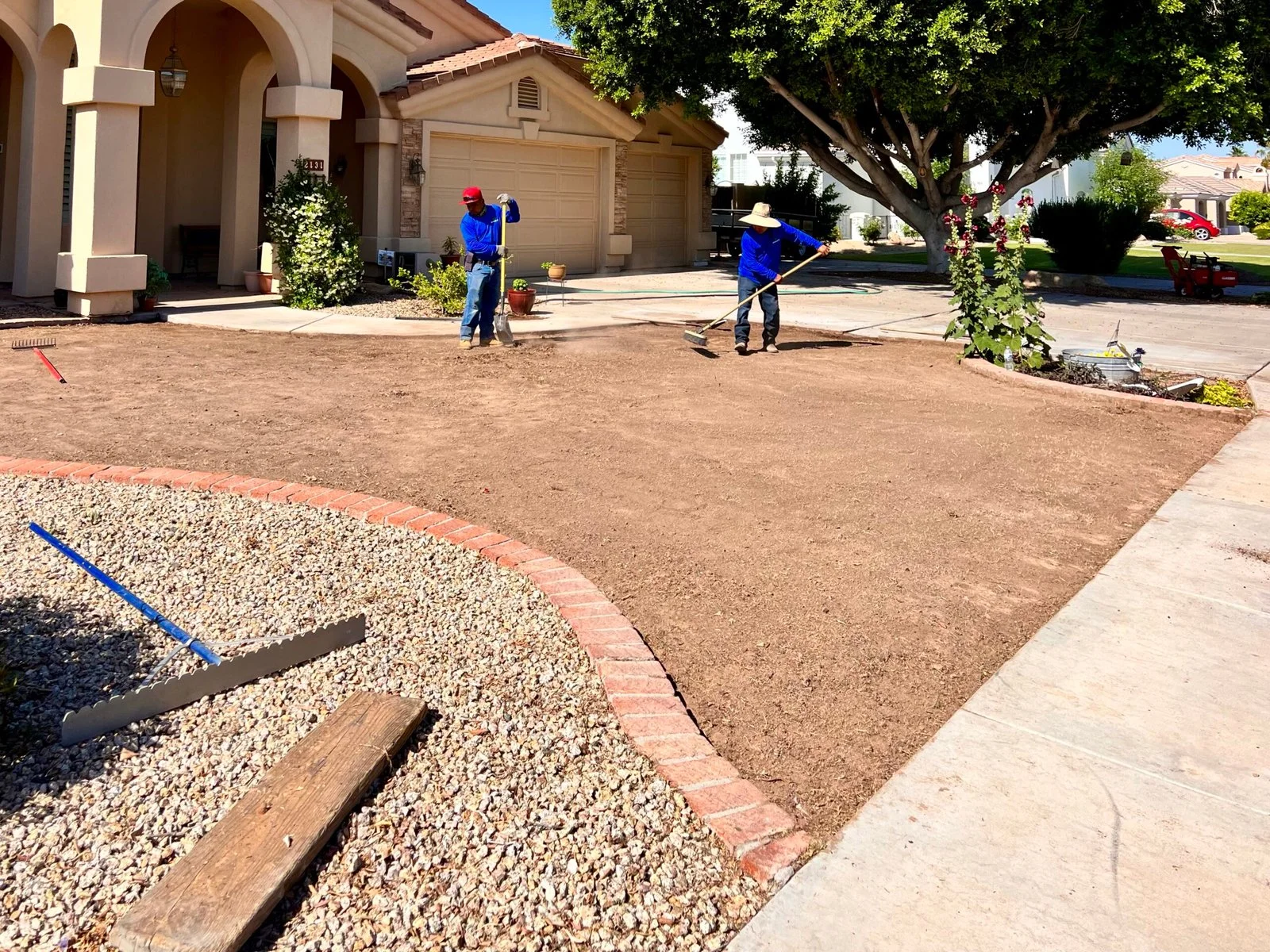
We assess the existing surface, mark utilities, and handle demolition of old concrete, turf, or rock. The ground gets cleared and graded before anything new goes in.
- 02
Base Prep and Layout
Excavation to correct depth, aggregate base installed and compacted in lifts, edge restraints set, bedding sand screeded to grade. Pattern and slope confirmed before pavers touch the ground.
- 03
Installation, Sand, and Cleanup
Pavers set by hand to pattern, cuts made on site, polymeric sand swept and activated, final plate compaction run. Full cleanup before we leave. You'd barely know we were there except for the finished surface.
Paver Repair
Existing Pavers Sinking, Cracking, or Coming Loose Sinking
Paver Materials We Work With
- 01
Concrete Pavers
Most affordable. Wide pattern and color range. Hold up well in desert heat if installed over a proper base. Good choice for driveways and high-traffic areas.
- 02
Travertine
Natural stone. Cooler underfoot than concrete in direct sun, which matters in Arizona summers. Popular for pool decks and patios. See our travertine installation page for specifics on that material.
- 03
Flagstone and Slate
Natural, irregular cuts that fit desert landscaping aesthetics well. Pairs cleanly with desert landscaping and custom landscape design projects.
Straight from Google
What Customers Say About the Paver Work
Infinity Turf and Landscaping installed pavers and did a great job. Emelis and his crew were professional and one could not tell they had been there except for the finished product. Emelis price is very competitive. I recommend his work to anyone who needs pavers. I am a very pleased customer, Excellent work!
 Carl MillerFeb 2026 · Google
We highly recommend Emilis for your turf and hardscape needs. He is communicative, knowledgeable, and detailed. He and his crew cleaned up and made sure we were happy before they left the job.
 Lisa HauserApr 2026 · Google
Emilis and his whole crew were absolutely amazing! They were quick, detail oriented, and extremely easy to work with. I let him know I needed a pet friendly yard and he helped me plan the whole thing and showed me which options would work out the best. Communication was seamless and Emilis is top notch. A great person and a man who truly cares about his craft. I can’t recommend them enough 🤙🏼🔥
 Hi Life FitnessJan 2026 · Google
These guys did an amazing job on my front yard! Emilis was through and a great communicator. He took my original idea and made it so much better! He gave me a great price, and he was quick! Finished in the agreed time and went the extra mile. 10/10 would recommend him to do any work you have!
 Gabe Gonzalez (theonlygabe)Mar 2026 · Google
Great job! The team effectively communicated all the time and was always on time and attentive to all our requests. Highly recommend
 GREIDY PUIGApr 2026 · Google
Paver Installation and Repair: Common Questions
How deep does the base need to be for a paver patio in Arizona?
Can sunken pavers be repaired without replacing the whole patio?
What is polymeric sand and why does it matter in the desert?
How do paver driveways handle Arizona's heat compared to concrete?
Do pavers require sealing after installation?
How long does a typical paver installation take?
Ready to Fix or Install Pavers the Right Way?
One crew. No subcontractors. Free quote.